How to Make the Business Case for Safety Investment

Budget conversations are often where even the strongest safety programs lose momentum. This isn’t for lack of evidence, but for lack of the right framing. Safety investment competes with other operational priorities for a finite pool of money, and the strongest technical argument isn’t always granted the desired funds. The challenge is translating what you know into terms that move a budget.
Lead with cost, not compliance.
Compliance discussions get you a seat at the table, but they rarely win the argument. Telling leadership you need better chemical management software because OSHA requires it will get you a conversation about minimum viable compliance, not a meaningful investment.
The stronger argument is financial:
- Work injuries cost US employers $167 billion in 2022 (National Safety Council)
- The average workers' compensation claim is more than $41,000 (National Safety Council)
- For every $1 invested in workplace safety, companies typically see $4 to $6 in return (Safety and Health Magazine)
That's the conversation leadership understands. Frame your safety investment request in those terms from the outset.
Connect your ask to a specific operational risk.
Specific requests tied to identifiable risks are much more likely to succeed than generic requests for better tools.
Before you walk into the room, audit your current chemical management tools and processes and quantify the gaps:
- How many Safety Data Sheets in your inventory haven't been reviewed in the past two years? One year?
- How many sites are running different versions of the same chemical inventory?
- How long would it take your team to locate a complete, accurate SDS during an incident?
These are all solid questions that represent operational and financial exposure. When you can show leadership that your organization has hundreds of chemicals across multiple sites with no centralized visibility, the case for investment stops being about software and starts being about the risk the business is currently carrying.
Anticipate the objections before they arise.
In EHS management, budget conversations often follow predictable patterns. Being ready for them is imperative.
"We haven't had a major incident." This is a common objection hiding a very dangerous assumption. The absence of a recorded incident doesn't mean risk is absent. It may mean the warning signs haven't been acted on yet. Frame the investment as the system that catches those signs before they become something far more costly than new software.
"Can't we manage this with what we have?" Spreadsheets and shared drives create risk. When chemical data lives in multiple places, version control breaks down, and the company loses the ability to see its own exposure clearly. That fragmentation has a cost. It shows up as hours of EHS management time spent chasing information that a centralized system would surface in seconds.
"What's the ROI?" Be ready with a number. Calculate the hours your team currently spends on manual SDS management, compliance reporting, and responding to information requests. Multiply that by an hourly cost. Add your current incident and claims costs. Then show how a centralized platform would change each of those numbers.
Make it easy for leadership to say yes.
The final step is reducing friction. Come with a proposal, not a conversation. That means bringing a defined scope, a clear implementation path, and a realistic timeline. Remember, leaders who are persuaded in principle may still hesitate if they believe the next steps feel too complicated.
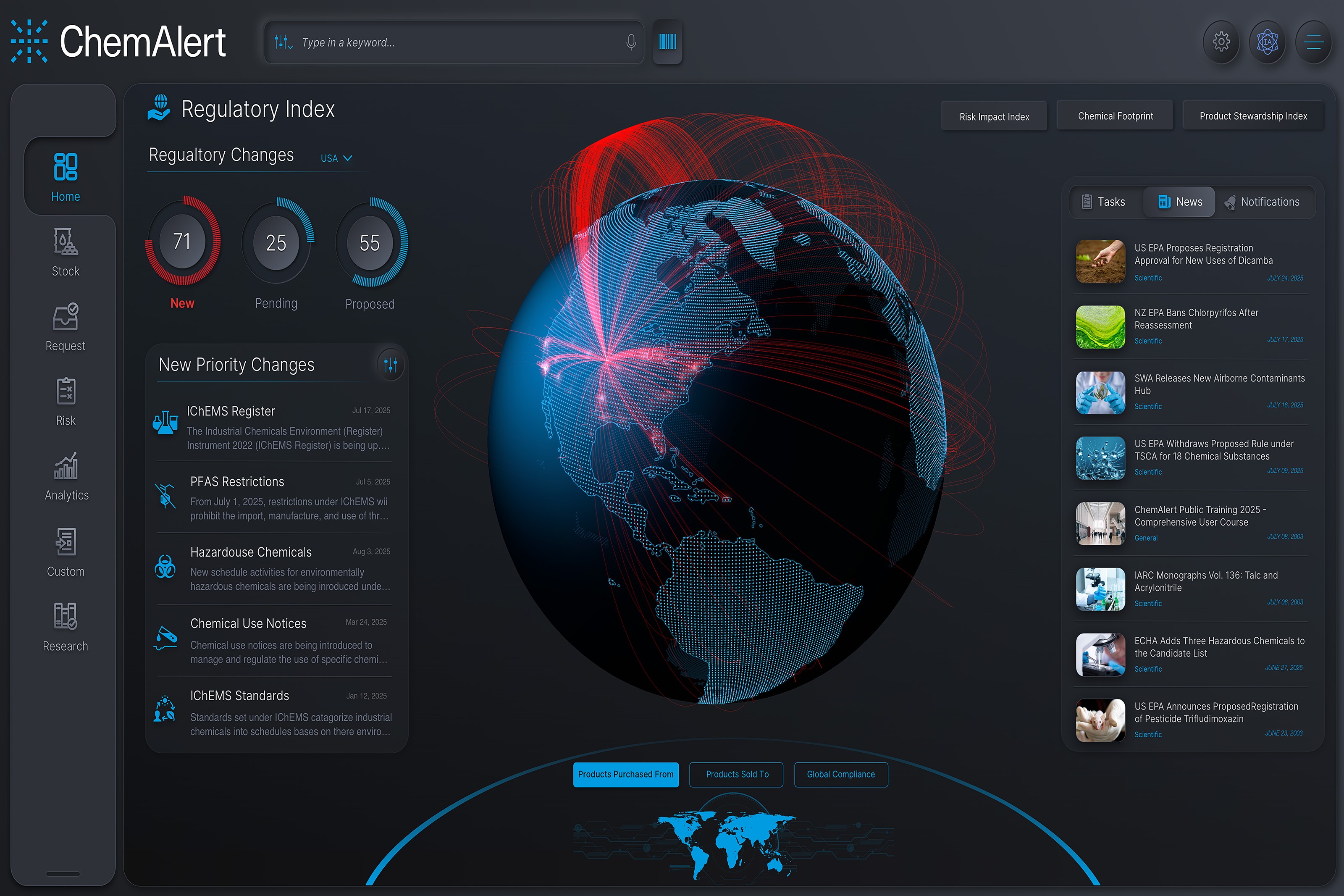
ChemAlert makes this straightforward. As a centralized chemical management software platform, ChemAlert provides EHS teams with complete visibility into their chemical inventory, SDS library, and compliance status across all sites. The platform is designed for enterprise deployment, integrates with existing workflows, and is backed by a scientific and technical support team from day one.
The safety investment conversation doesn't have to be an uphill battle. Walk in with the right data, frame it in the right language, and provide leadership with a clear path forward.
Find out how ChemAlert can strengthen your business case for safety investment.


%20(1).jpg)