How Real-Time Chemical Risk Assessment Reduces Incident Response Time in Mining

When a chemical spill or exposure occurs on a mine site, the quality of the response comes down to one thing: how quickly accurate information reaches the people who need it.
Does the site supervisor know which chemical(s) is/are involved? Are the Safety Data Sheets current? Do emergency responders know whether the substance is reactive, flammable, or toxic if inhaled? In operations with large, fragmented chemical inventories, these questions can take time to answer. In an emergency, every second counts.
Australian industry has made genuine safety progress, with a national workplace injury rate of 3.5 percent against a global average of 12.1 percent (Safe Work Australia, 2025). However, mining remains one of the highest-risk industries in the country, and fatalities in the sector nearly doubled in 2024 over the previous year.
When seconds count, information is the biggest asset.
Real-time monitoring in mining usually means sensors, wearables, and equipment telemetry. These are valuable. But real-time chemical risk assessment addresses a different problem: accessing accurate, current chemical hazard information the moment it’s needed.
That means having the right information available before an incident escalates, before anyone starts searching for a binder, and before someone is on hold waiting for a supplier to confirm what's in a product. Operations with centralised, up-to-date chemical information respond faster and more effectively when something goes wrong. It’s the same principle as real-time equipment monitoring, applied to chemical hazard data.
Where incident response often breaks down
When chemical hazard incidents occur on mine sites, contributing factors often stem from the same problems:
- Outdated Safety Data Sheets that no longer reflect current formulations or hazard classifications
- Chemical inventories that aren't reconciled across multiple areas of a large site
- No clear visibility into storage incompatibilities between chemicals held nearby
- Emergency responders arriving at an incident without sufficient details about the incident
The chemical is known, and the hazard is documented. The problem is that the information isn't where it needs to be when someone needs it most.
A chemical risk assessment stored in a filing cabinet or on a shared drive is not a real-time tool. It's a record. The distinction matters when someone is deciding whether to evacuate 50 metres or 500.
How faster access to chemical data changes incident response.
In operations where chemical data is centralised and up to date, several things happen differently when an incident occurs.
First responders can immediately identify the substance involved, access its SDS, and confirm appropriate emergency procedures without searching through paper records.
Site supervisors can quickly assess storage incompatibilities in the affected area and determine whether nearby chemicals could escalate the incident if exposed to heat, water, or spill runoff.
Emergency services arriving on site can be briefed accurately, improving the targeting and quality of their response.
Post-incident investigations are faster and more reliable because the chemical data record is complete and audit-ready.
None of these outcomes requires new technology at the time of the incident. They only require that chemical risk assessment information be maintained accurately and made available through a system that people can use under pressure.
Build the capability before it's needed.
Many mining operations know their chemical data could be improved. The question is whether they build the systems to improve it before an incident forces the issue. That means:
- A centralised chemical inventory that reflects what’s on site across every location and storage area
- SDS libraries that update automatically when manufacturers revise their data
- Chemical risk assessment information accessible on mobile devices for supervisors and response teams working across large sites
- Clear visibility into storage compatibility
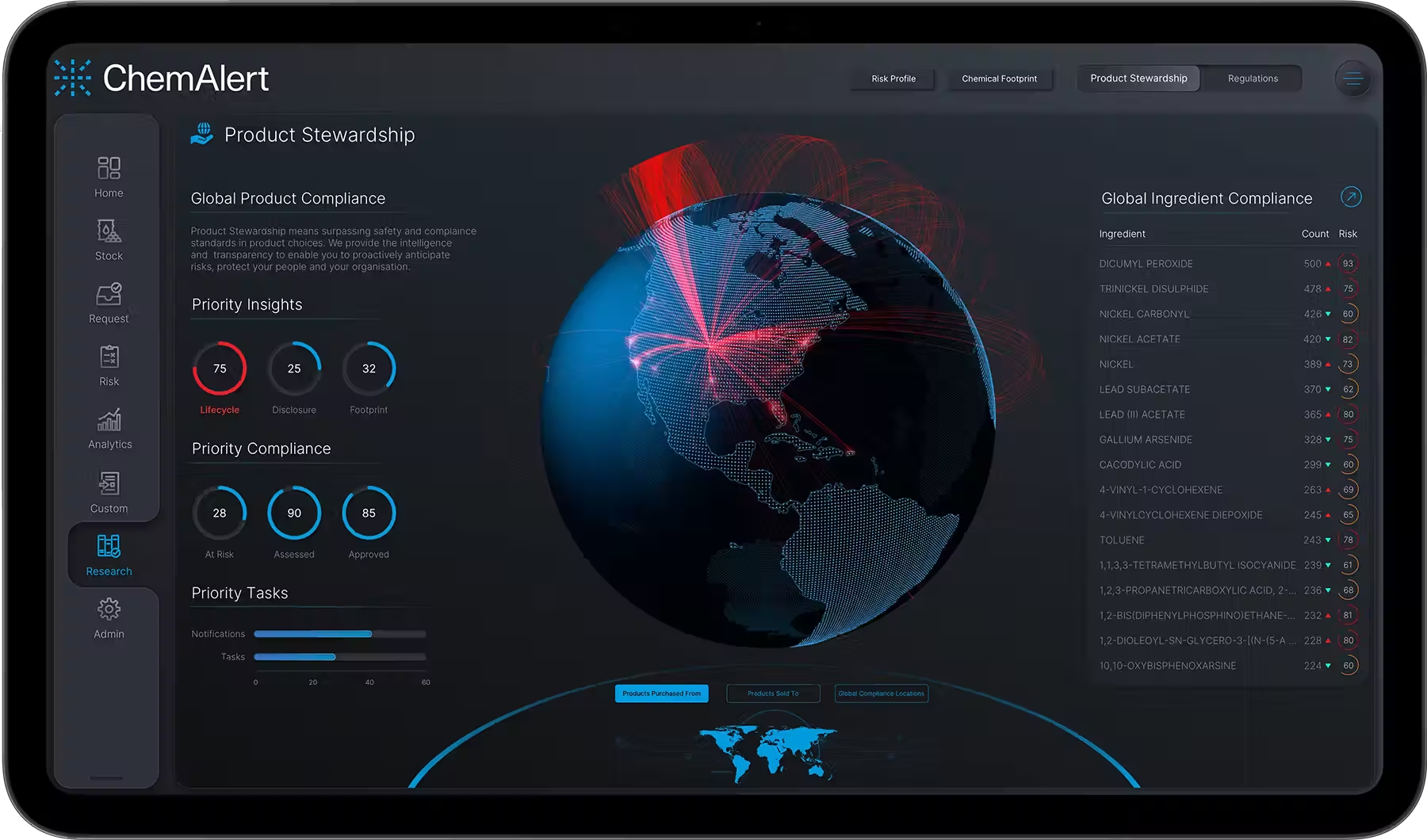
ChemAlert provides mining operations with the chemical management infrastructure to enable faster, more informed incident response. A centralised SDS management system and chemical inventory platform ensures the information needed in an emergency is current, accessible, and reliable across the operation. Automated alerts flag chemical hazard safety updates and SDS revisions as they occur, so response teams never work from outdated data.
Find out how ChemAlert supports chemical risk assessment and incident response.


%20(1).jpg)